
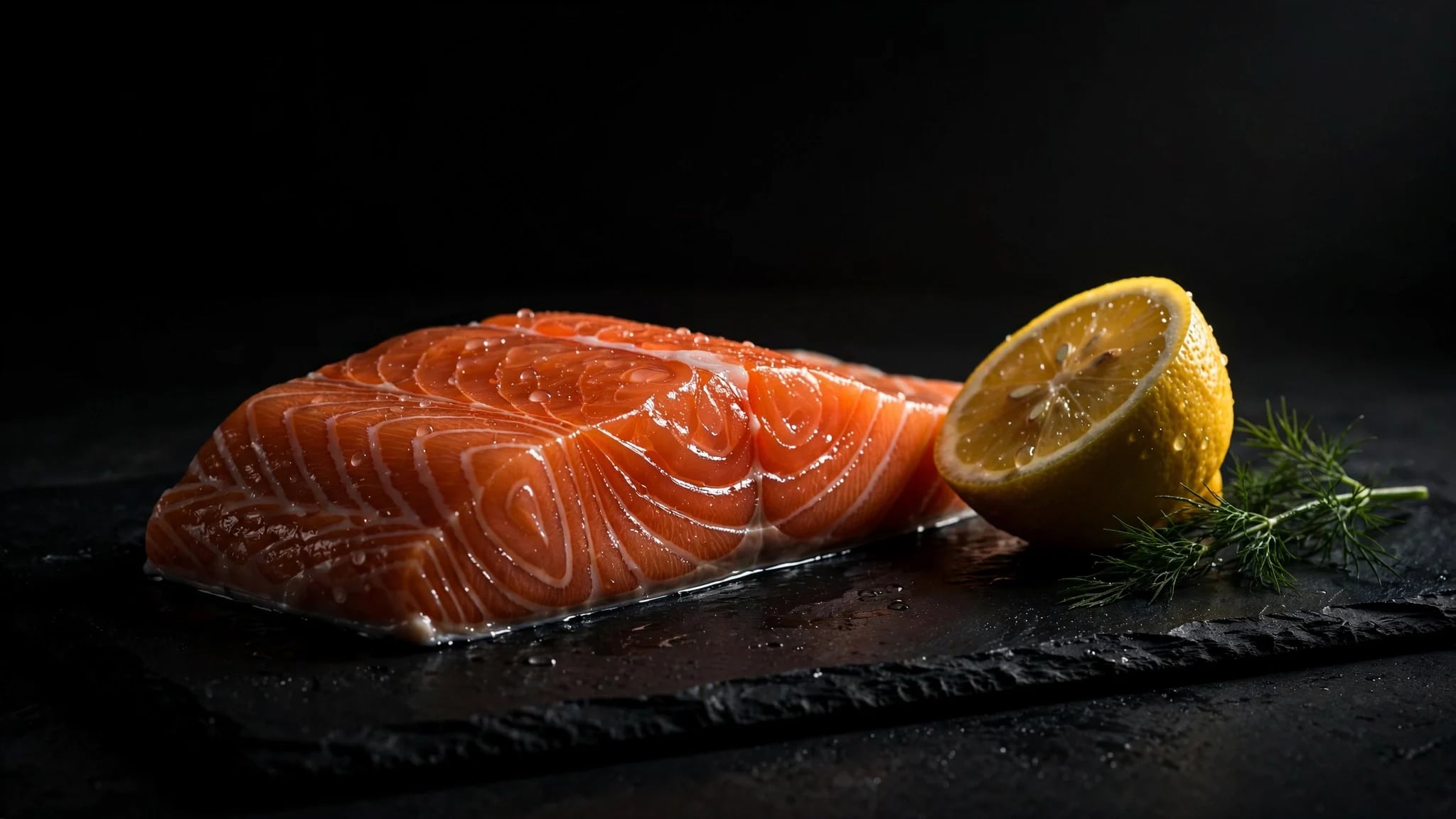
Fatty fish: salmon, mackerel, herring

Several times a week. Fatty fish is the main source of omega-3 in the diet, and there is almost nothing to replace it with: flax and chia provide a different form of these fats and work less effectively.
Which fish counts as fatty?
Salmon, mackerel, herring, sardines, trout, halibut. Among options available year-round, mackerel and herring work best — they are cheaper than salmon and contain no less fat.
Cod, pollock, and hake are protein, not fat. They are good in their own right, but they do not solve the omega-3 problem.
In what form should you buy it?
| Type | Note |
|---|---|
| Fresh or frozen | the basic option, ready in 15 minutes |
| Lightly salted | convenient, but check the ingredients: sugar is sometimes included |
| Canned in its own juice | a practical replacement, inexpensive and quick |
| Canned in oil | fine if the oil is olive oil, not some unknown refined oil |
| Smoked | less often: a processing method, not a prohibition |
| In batter and breadcrumbs | do not buy it |
What should you do if fish is expensive?
Buy mackerel and herring instead of salmon. They belong to the same fat-content category, while the price difference is several-fold.
The second option is frozen instead of chilled. The taste difference in a finished dish is small, and storage is easier: take it out, thaw it, and cook it in fifteen minutes.
The third is canned fish in its own juice. A can of sardines solves the task no worse than a salmon steak and requires neither cooking nor planning.
How should you cook it so you do not get tired of it?
The easiest way is in the oven, without batter and without sugar in the marinade.
The practical minimum: fish, olive oil, salt, lemon, and herbs. Fifteen to twenty minutes at 180 degrees. After that, only the vegetable side dish and dressing change, and the same dish stops feeling like the same dish.
Herring and mackerel are convenient to keep ready to eat: they do not need reheating and go well with green salad and avocado.
What do people most often do wrong?
- Replace fish with fish-oil capsules without a doctor's prescription
- Buy fish in batter and count it as protein
- Buy only salmon and give up because of the price
- Do not check the ingredients of lightly salted fish
- Eat fish once a month and expect results
When this is not suitable
During pregnancy and breastfeeding, fish species high in mercury — large predatory fish — are limited. Salmon, herring, and sardines are usually not on this list, but the list and amount should be clarified with a doctor.
With gout and when taking anticoagulants, the amount of fish and omega-3 supplements should be discussed with a doctor. With chronic kidney disease, the overall protein allowance is determined by a doctor.
How many times a week?
The guideline is several times a week, that is, approximately three to four meals with fish.
It is not necessary every day. There is no point in chasing “fish every day”: it gets boring quickly, and it is a waste of money.
A practical weekly plan: fresh or frozen fish twice, lightly salted herring or mackerel once, and canned fish once. This keeps it from becoming tiresome and keeps the budget under control.
How should you thaw it properly?
In the refrigerator, overnight. This is the only method that keeps the fish from losing its texture.
What not to do: thaw it in warm water or in the microwave. The outer layer starts to cook while the inside remains frozen, and the fish falls apart in the pan.
If there is absolutely no time — in cold water, in a bag so that the water does not touch the fish. Half an hour for a small piece.
Can capsules replace it?
Without a doctor's prescription — no.
Fish provides not only omega-3, but also complete protein, vitamin D, and trace elements. A capsule covers one item on this list.
One more thing: omega-3 supplements affect blood clotting, and a doctor, not the internet, prescribes them when you take anticoagulants. If you do not eat fish for principled reasons, discuss supplements with a doctor as well.
What to read next
See the main guide for how the entire approach works: low-carb eating: a complete guide.
The other materials in the section are collected here: food and shopping.
Related topics: Sugar substitutes: erythritol and stevia and Vegetables that grow above the ground.
- Avocado every day: why and how muchHalf a fruit a day: potassium, fats, and volume. How to choose a ripe one and what to do if you don't like the taste.
- How to Read an Ingredient List and Find Hidden SugarTwelve names for sugar in an ingredient list, the ingredient-order rule, and foods where you do not expect to find it.
- Superfoods: seven foods for every dayA short selection worth keeping in the fridge at all times, and why each one is needed.
- Weekly shopping: list and budgetA ready-made list for the week, the order in which to go around the store, and where you can save without losing the essentials.
- White list of foods for LCHFWhat we always take, what we limit, and what we do not take at all — as a list, with quantity guidelines.
- Sugar substitutes: erythritol and steviaAllowed, but with a caveat: the sweet taste remains a habit, even when there is no sugar in it.
Reviewed by Anastasia Zhukova, Fitness Trainer • Author of a Nutrition and Training System • Creator of an AI Personal Support Platform
A human has reviewed this material against the method and real client practice.