
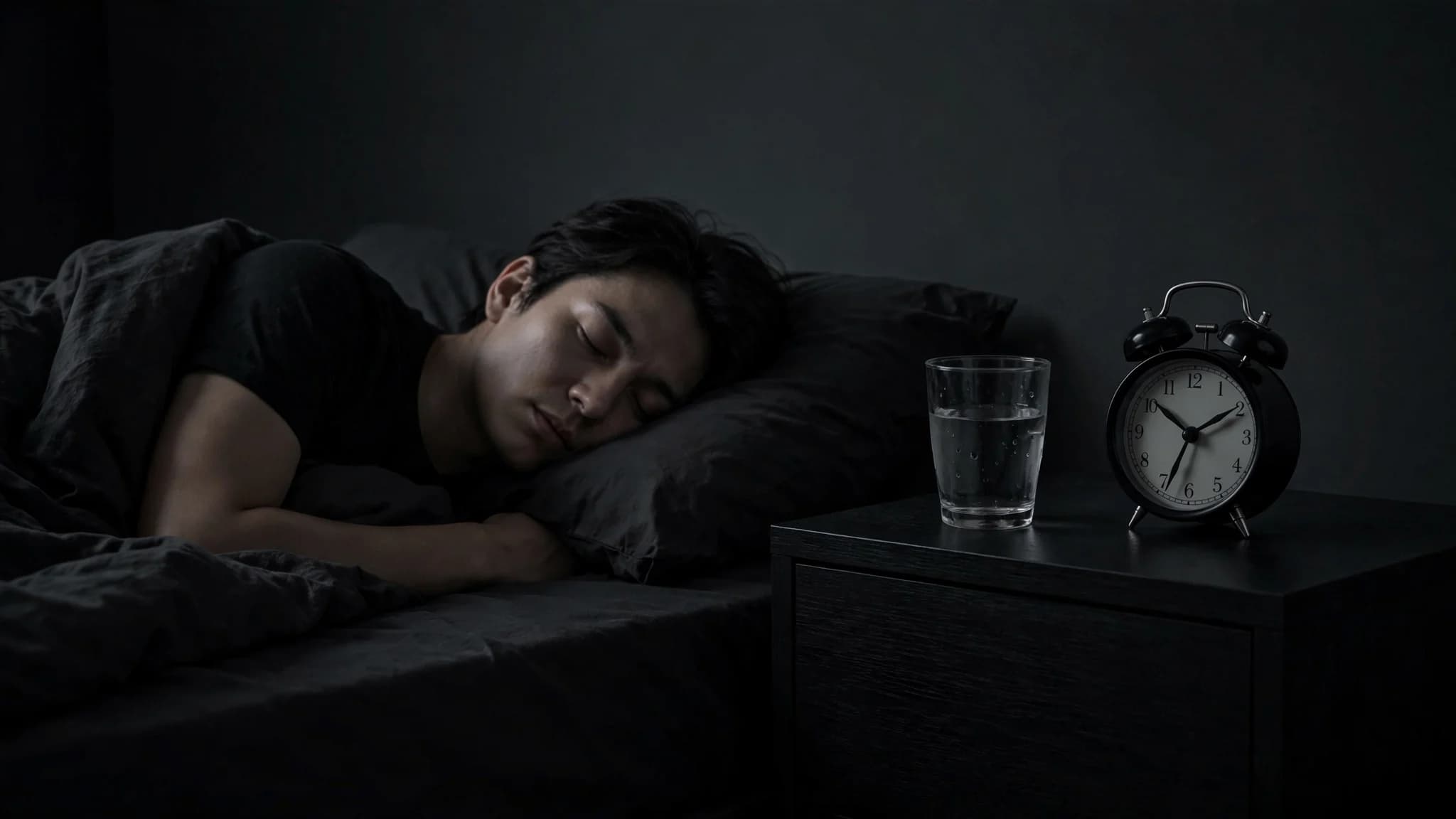
Sleep on LCHF: falling asleep and depth

For some people, sleep becomes steadier: nighttime hunger awakenings disappear along with blood sugar swings. For others, falling asleep gets worse in the first weeks — usually because they are not eating enough in the evening or because of salt.
Why do nighttime awakenings disappear?
Because the early-morning drop in blood sugar disappears.
With a diet high in fast carbohydrates, an evening rise in glucose ends with a nighttime drop, and a person wakes up at three or four o’clock, sometimes feeling hungry or anxious. When fat becomes the main fuel, these swings do not occur.
The second factor is satiety. A complete last meal removes the hunger that makes sleep shallow.
Why can things get worse in the first weeks?
Three common reasons, and all of them can be corrected.
The last meal is too light: going to bed hungry is a bad idea, especially on a new eating pattern. Not enough salt: salts leave the body along with fluid, and this can be felt at night as well. And closing the eating window too early: if your last meal is at five in the evening and you go to bed at one in the morning, the gap is too long.
A fourth reason is less common: coffee in the second half of the day, which suddenly feels stronger on the new eating pattern.
What should you check if your sleep gets worse?
| Sign | What to check |
|---|---|
| I can’t fall asleep | whether the last meal was sufficient |
| I wake up at 3–4 a.m. | whether you are eating enough overall during the day |
| Sleep is shallow | salt in the range of 3–5 g, water around two liters |
| Heart palpitations in the evening | coffee after lunch, amount of salt |
| Restless legs | discuss it with a doctor: it can occur with deficiencies |
When should you close the eating window?
So that two or three hours remain between the last meal and sleep.
With an 8–10-hour window and a schedule of 10:00, 13:00, 18:00, this happens naturally. If you go to bed late, it makes sense to shift the entire window rather than stretch it: what matters is the length of the overnight break, not specific times.
You should not eat right before bed — but you also should not go to bed hungry for the sake of a “clean” break.
Is it worth changing your diet for sleep?
If your sleep has been poor for a long time and not only on the new eating pattern — no, the plate is not what needs fixing.
Sleep deprivation and stress themselves increase cravings for fast carbohydrates and keep weight from changing, so the relationship works both ways. But chronic poor sleep is a separate issue: routine, light, caffeine, and a doctor for persistent problems.
Nutrition can help remove a specific cause — nighttime hunger and blood sugar swings. It does not treat everything else.
What do people most often get wrong?
- Going to bed hungry for the sake of a long overnight break
- Making the last meal merely symbolic
- Suddenly cutting out salt along with carbohydrates
- Drinking coffee after lunch and blaming the diet
- Expecting a new diet to cure chronic insomnia
When this is not appropriate
For sleep apnea, persistent insomnia, and restless legs syndrome, dietary changes do not replace an examination — these conditions require a doctor.
For people with diabetes who use insulin, nighttime awakenings may be a symptom of hypoglycemia, and this requires a separate discussion with a doctor, not a change in eating pattern. During pregnancy and breastfeeding, do not start restricting carbohydrates on your own.
How many hours are needed?
Adults usually need seven to nine hours. This is not a parameter that can be optimized through willpower.
Regularity matters more than the number of hours: a consistent wake-up time works better than trying to “catch up” on sleep at the weekend. Shifting your schedule by three or four hours on Saturdays has an effect similar to changing time zones.
If you regularly sleep less than six hours, discussing nutrition loses its meaning: cravings for fast carbohydrates will increase regardless of what is on your plate.
Does a late dinner interfere with sleep?
Both a meal that is too late and one that is too early can interfere, for different reasons.
A heavy meal right before bed makes it harder to fall asleep and causes reflux in some people. The guideline is two or three hours between the last meal and sleep.
But you should not go to bed hungry for the sake of a long overnight break either: hunger causes shallow sleep and awakenings. If there are six hours between dinner and bedtime, it is wiser to shift the entire window rather than endure it.

What should you do if your sleep got worse specifically after starting?
Check three things in order: the size of the last meal, salt, and coffee.
A dinner that is too light is the most common reason. Not enough salt due to fluid loss is the second. Coffee after lunch, which suddenly feels stronger on the new eating pattern, is the third.
If none of these applies and your sleep has not recovered within two or three weeks, this is no longer about nutrition: persistent sleep problems should be assessed by a doctor.
What to read next
How the approach works as a whole — on the reference page low-carb eating: complete guide.
The rest of the section’s materials are collected here: body and wellbeing.
Related topic: Eating too little is also a mistake and Where swelling goes on a low-carb diet.
Reviewed by Anastasia Zhukova, Fitness Trainer • Author of a Nutrition and Training System • Creator of an AI Personal Support Platform
A human has reviewed this material against the method and real client practice.